
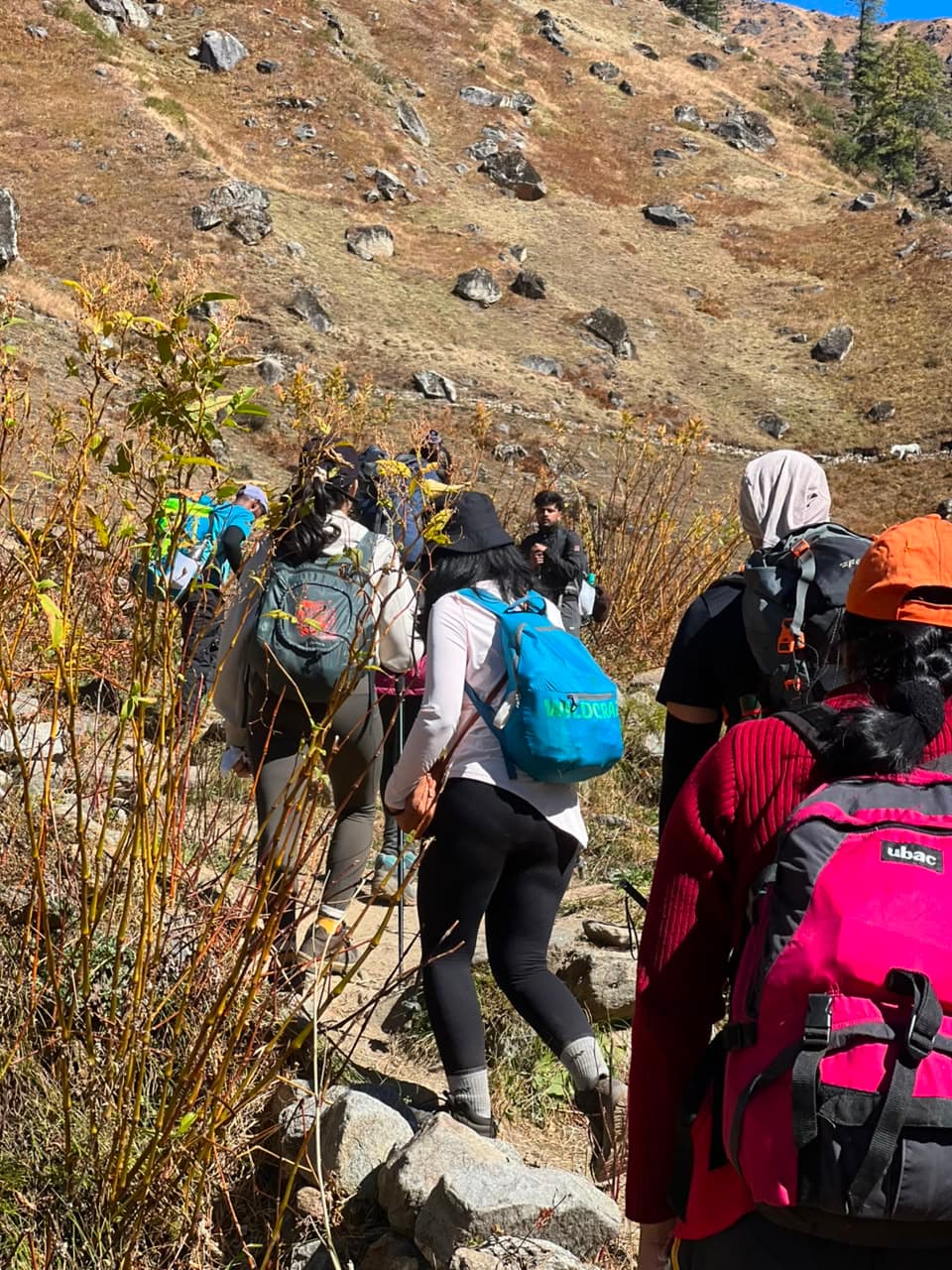
Roopkund
The Skeleton Lake — a mysterious glacial lake at 5029m surrounded by ancient human skeletal remains.









Highlights
- The mysterious Skeleton Lake at 5029m
- Views of Trishul and Nanda Ghunti
- Ancient bugyal (meadow) at Ali Bugyal
- Oak and rhododendron forests
- One of India's most dramatic treks
Roopkund — Overview
Roopkund, also known as the Mystery Lake or Skeleton Lake, lies hidden in the Trishul massif at 5029m. The lake contains hundreds of ancient human skeletons on its edge, adding an eerie mystique to an already dramatic high-altitude trek.
Roopkund — Complete Guide
Our mission has always been to ensure that no trekker steps into the Himalayas without the right perspective. A trek is not just a checklist of summits; it is a serious commitment to the outdoors. Having the right information is what separates a reckless climb from a soulful journey.
This section serves as your definitive manual for the Roopkund. We have distilled years of mountain experience and real-time feedback into this guide to give you a clear, honest picture of the trail.
We provide this depth of information because we want you to be more than just a visitor—we want you to be a prepared, responsible trekker who respects the mountains as much as we do.
Day 1: Lohajung to Didna Village
- Altitude: 2640m
Difficulty: Hard — Suitable for fit beginners.
You will cover a total distance over 8 trekking days, gaining significant altitude. The terrain includes steep ascents and rocky paths. Weather can change rapidly at altitude — rain, snow, and mist are common. Our Trek Leaders monitor conditions and make safety decisions accordingly.
Altitude: You will reach 16,499 ft. At altitudes above 10,000 ft, the chances of Acute Mountain Sickness are real. Fitness helps, but even experienced trekkers can be affected.
Best months to visit:
The base camp is accessible by road from Rishikesh or Haridwar. Nearest railway station is Haridwar; nearest airport is Jolly Grant Airport, Dehradun. We arrange pickup from Rishikesh.
- Layered woollen clothing (thermal base + mid-layer + rain jacket)
- Trekking poles
- Good quality trekking shoes (waterproof)
- Sunscreen SPF 50+, sunglasses
- Headlamp with spare batteries
- Personal first aid kit and any prescription medicine
- Water bottle (2L minimum)
- Light snacks (nuts, dry fruits, energy bars)
Start training 6 weeks before the trek. Focus on:
- Cardio — 45 minutes of jogging/cycling, 5 days a week
- Stair climbing — builds leg and lung capacity
- Squats and lunges — strengthen knees for steep descents
- Weekend hikes — practice with a loaded backpack
Fitness Benchmark: Complete 5 km in under 40 minutes before the trek.
Your safety is our priority. We bring oxygen cylinders, high altitude medical kits, and certified Trek Leaders who are trained as Wilderness First Responders.
All accommodation, Meals, Certified high-altitude guide, All permits, Safety & first aid.
Transport to Lohajung, Personal gear, Altitude sickness medication, Insurance.
Detailed maps and GPS coordinates will be provided in your pre-trek briefing document.
Yes, with proper fitness preparation. The difficulty is rated Hard.
Photo Gallery1 Photos
The IBEX Spirit of Trekking
Our values on and off the trail